Road-name signs and building numbers coming to a ger district in Ulaanbaatar
South Korea will help Mongolia introduce a road-name address system modeled on its own through an 11 billion won ($8.2 million) aid project running through 2029, marking the first overseas rollout of the Korean address model.
The Ministry of the Interior and Safety said Thursday that the project, financed through official development assistance from the Korea International Cooperation Agency, has entered its implementation phase.
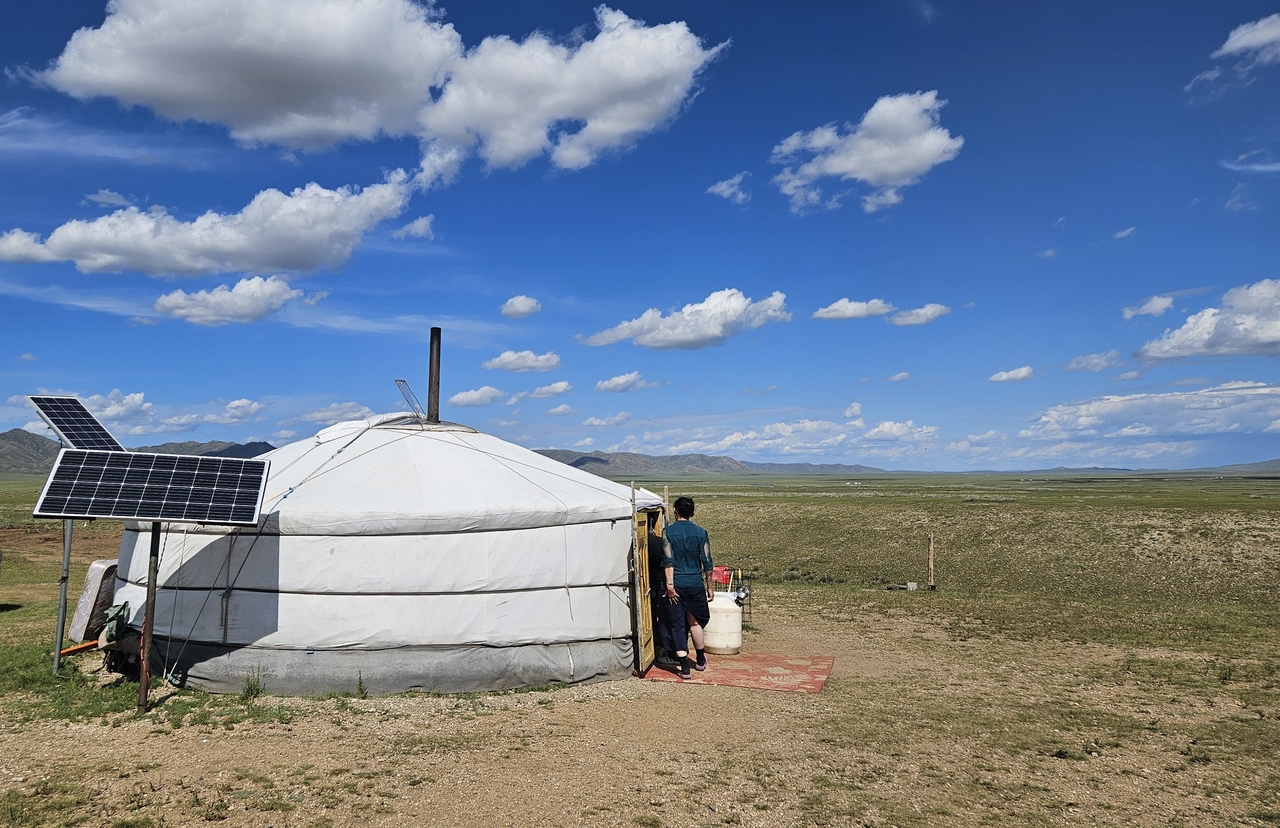
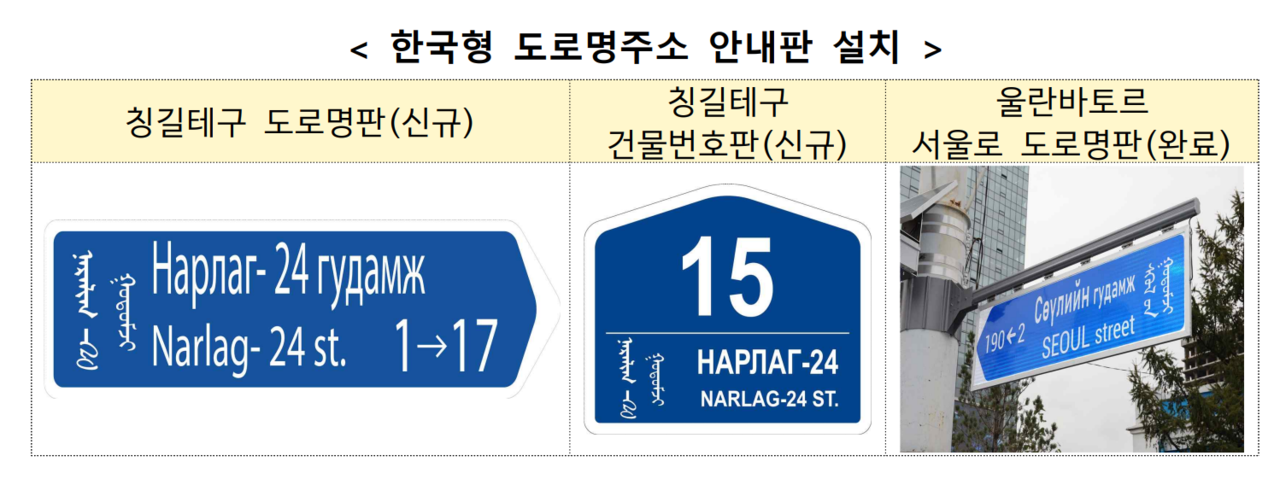
As part of the launch, Korean-style road-name signs and building number plates will be installed along Narlag 24 Street in a ger district of Chingeltei, Ulaanbaatar. Gers, also known as yurts, are traditional tent-like dwellings used by many Mongolians.
Under the system, numbers are assigned at 20-meter intervals, with odd numbers on the left side of a road and even numbers on the right. Mongolia is also adopting grid-based location codes for gers, land and buildings, including in areas without conventional street addresses.
“Address information is a vital part of national infrastructure, connecting public services with people’s daily lives and safety,” Vice Interior Minister Kim Min-jae said. “We will share Korea’s experience in using address data for digital government, disaster safety and logistics.”
Kim is leading a delegation to Mongolia from Wednesday through Friday to review the project and discuss its implementation.
He is scheduled to meet Mongolian Minister and Chief Cabinet Secretary Battumur Enkhbayar. Their talks will cover legal and administrative frameworks, the digitization and use of address data and exchanges between officials responsible for address policy.
Kim will also attend a ceremony marking the launch of the project, which is intended to strengthen Mongolia’s digital public administration.
The ministry signed a memorandum of understanding with Mongolia’s Cabinet Secretariat in September 2024 to support the development of its address system. A Korean-style road-name sign was installed on Seoul Street at the time.
The ministry plans to use the project as a model for address-system cooperation with Ethiopia, Tanzania and Botswana in Africa and Uzbekistan and Kyrgyzstan in Central Asia.
shwang9@heraldcorp.com